
Emotional connection without emotional overload
Many speakers are told to share their personal story in their business talks because that story is fundamental to who you are and what you do. Yet, when that story carries heavy, emotional, or triggering content, it’s easy to end up delivering emotional overload for the audience, and leaving you drained. Here are the top tips I share with my clients
Know why you’re sharing the story
Often we know we ‘should share’ but we don’t really understand why. Of course it’s to get to know us, but that doesn’t mean we have to include every single moment. When we speak about our past it allows the audience to feel connected through shared or similar experiences and understand our values and perspective. When they feel connected, you become more approachable. Ask yourself – what would help a potential client feel more comfortable to approach me?
Example – In my talks I often share how terrified I used to be at speaking, because I know many people look at someone speaking confidently and don’t think they could possibly understand how they feel. I know that, because that’s how I used to think.
Know that you don’t have to share everything
Your story might have many critical parts and the temptation is to include everything that you believe they should, could or would like to know. Telling your story does not need to be either a tell-all biography or a cv, consider it more some key moments in time. Go back to the reason for telling your story, consider what key moments might be most relevant to your audience and the overall intention of your talk, and just pick a few. How much time you spend on your story will depend on the reason you’re speaking and the shape you wish your talk to take – but always make sure you’re leaving time for the real value piece.
Benefit – Sharing a selection of mini stories not only means that this audience gets to know you better but that you can choose different selections for different events. A person seeing you speak multiple times will stay engaged with your talks, because they are hearing something new each time.
Know that you don’t have to give all the details
Often clients with highly personal stories will feel uncomfortable sharing their story. It can be because of the nature of what they’ve been through, or because they don’t want to name people they shouldn’t. Both are very valid reasons. Sometimes it’s just that there are specific details that they are concerned about including. Know that telling your story doesn’t mean you have to share every conversation, every incident or every person involved. What usually works best in these situations is to acknowledge the type of experience, only being as specific as you feel comfortable. For example you might say ‘ after having personally experienced domestic abuse I am now a strong advocate for creating safe spaces’. This is a powerful but diplomatic way of sharing an understanding of your perspective and building connection.
Power – Realising that you have complete control of what and how you share your story can reduce the stress on you as a speaker. As you get used to the audience reaction you may decide to include more or fewer details in future speeches, depending on how you feel and who you are speaking to.
Summary
Stories really do matter, but by realising why you’re sharing each piece, making deliberate choices and only including appropriate, manageable detail you can build connections that create more comfortable conversations.
Be notified when the next blog is posted
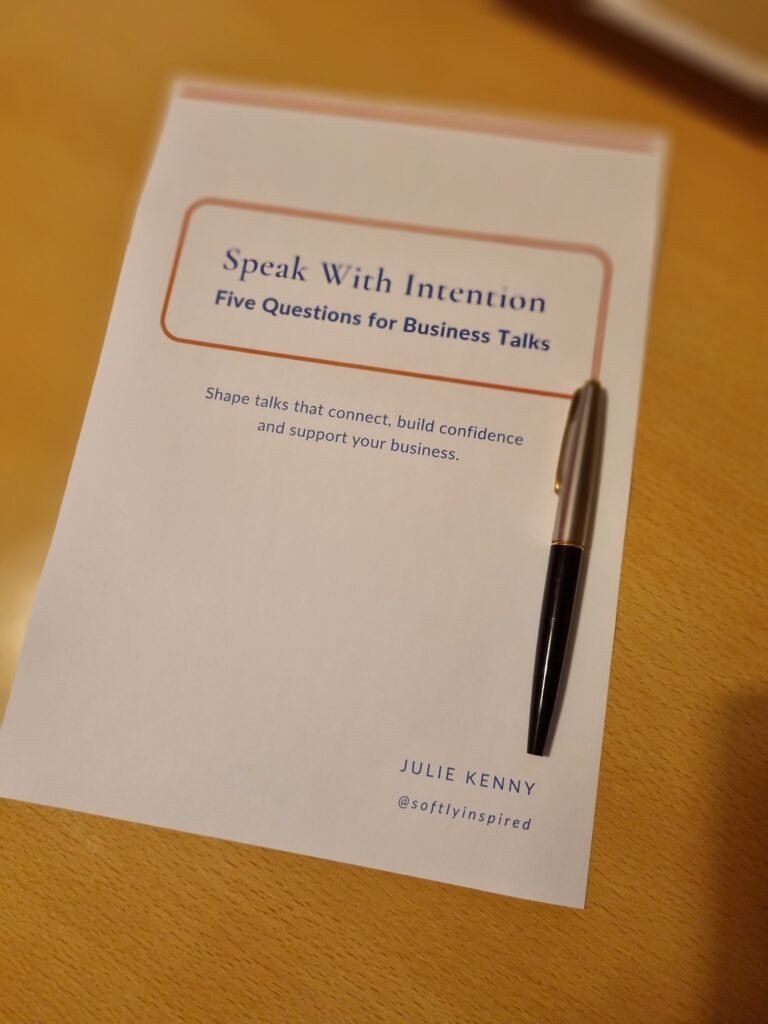
Sign up to the Softly Inspired newsletter and you’ll also receive a free copy of Speak with Intention. This workbook takes you through the five questions you need to consider if you want to make your words count.